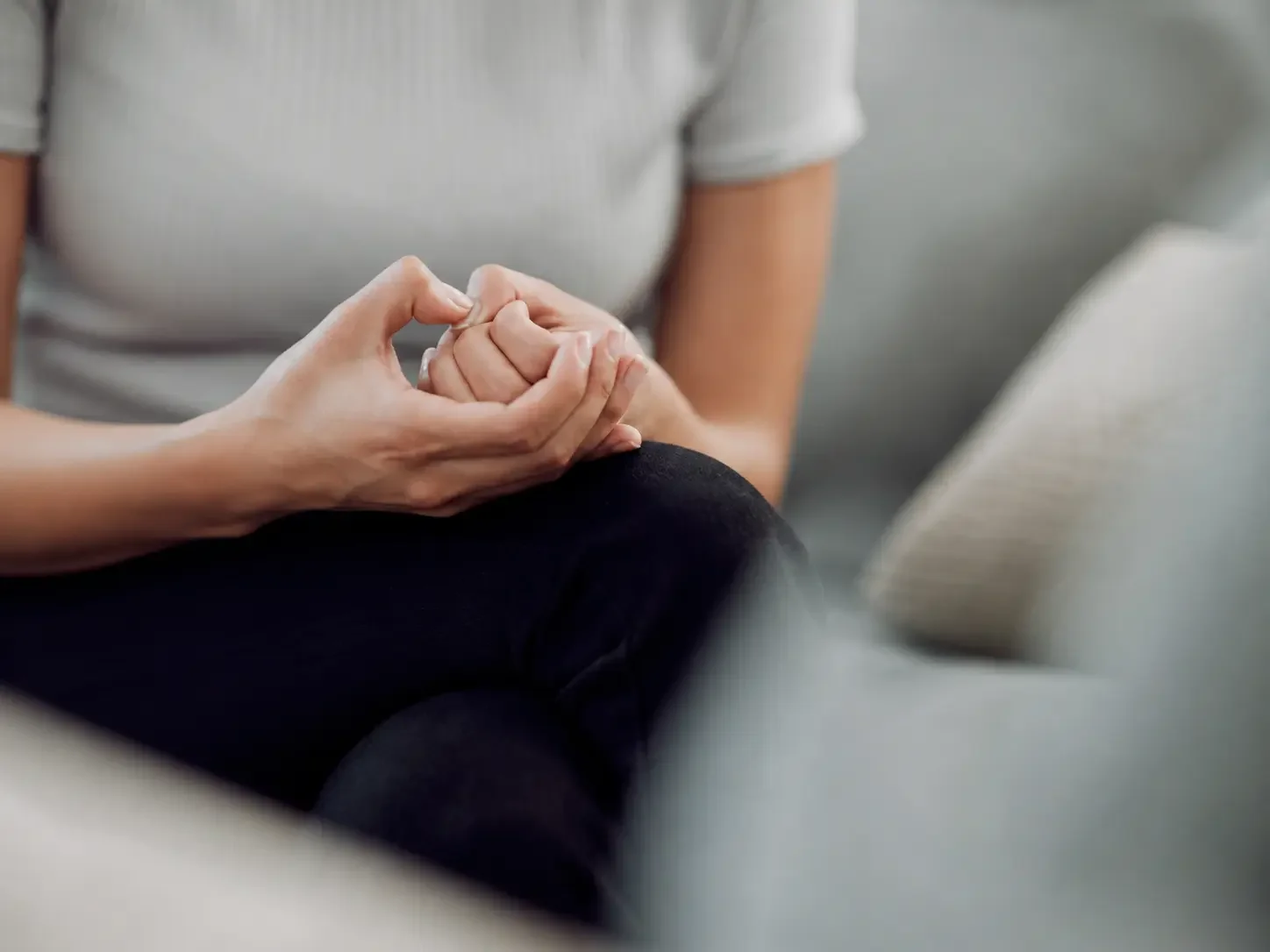
Why does anxiety feel so physical?
Anxiety is often talked about as though it is simply worrying too much. But for many people, anxiety doesn’t begin with a clear thought like:
“I’m anxious.”
It can start in the body.
Your heart feels like it is beating faster than usual.
Your shoulders are tense.
Your stomach feels unsettled.
You can’t seem to sit still.
You feel shaky, light-headed or short of breath.
Or you simply have that uncomfortable feeling that something isn’t right - even when you can’t explain what you are worried about. That can be confusing, especially if there is no obvious reason for you to feel anxious.
But anxiety can affect both the mind and the body. Physical symptoms such as a racing heart, trembling, sweating, nausea, dizziness, muscle tension and changes in breathing can all occur with anxiety.
Understanding why this happens can make anxiety feel a little less mysterious - and sometimes a little less frightening.
So, what actually is anxiety?
Feeling anxious from time to time is a normal part of life. We might feel anxious before an important conversation, when something is uncertain, when work becomes overwhelming, when there are problems in a relationship or when we are worried about someone we care about.
Our mind notices something that may be difficult, uncertain or threatening, and our body prepares us to respond. In simple terms, anxiety can be thought of as the body and mind going into alert mode. Sometimes that response is useful. If something genuinely requires our attention, our body needs to be able to react quickly.
The difficulty comes when that alert system stays switched on for longer than we need it to - or starts responding strongly to situations that are not immediately dangerous.
You can then end up feeling tense, restless or physically unsettled even while sitting safely at home, driving to work or trying to fall asleep.
Why can anxiety feel so physical?
Your brain and body are constantly communicating. When your brain senses possible danger or threat, your nervous system can trigger physical changes designed to help you respond.
That can mean your heart beats faster.
Your breathing may change.
Your muscles tighten.
You become more alert to what is happening around you.
Your stomach may feel unsettled.
These reactions are not imaginary. They are genuine physical responses happening in your body.
If your heart suddenly starts racing or your chest feels tight, you may begin worrying about the physical sensation itself. Then the worry creates more anxiety. And the anxiety can make the physical sensation stronger. Before long, you can find yourself stuck in a cycle of:
feeling something physically → worrying about it → becoming more anxious → noticing even more physical symptoms.
What can anxiety feel like in everyday life?
Anxiety does not look exactly the same for everyone. Some people experience obvious worrying thoughts. Others notice physical symptoms first.
You might experience:
a racing or pounding heart
tightness through your chest or shoulders
feeling shaky or restless
nausea or an unsettled stomach
dizziness or feeling light-headed
difficulty slowing your breathing
headaches or muscle tension
difficulty sleeping
feeling constantly on edge
trouble concentrating
irritability
finding it difficult to switch off
These symptoms can also occur for reasons unrelated to anxiety, so new, severe or concerning physical symptoms should always be discussed with an appropriate health professional rather than simply assuming anxiety is the cause.
Anxiety doesn’t always look like anxiety
One of the reasons people can live with anxiety for a long time without recognising it is that it doesn’t always look like obvious fear or panic.
Sometimes it looks like constantly thinking ahead.
Replaying conversations after they happen.
Checking things repeatedly.
Struggling to make a decision because you are thinking through every possible outcome.
Feeling irritated when plans change.
Finding it difficult to relax because you feel as though there is always something you should be doing.
Lying in bed exhausted while your brain runs through tomorrow.
Feeling uncomfortable when you are not in control of a situation.
Or having a constant sense that you need to be prepared for whatever might happen next.
A person may say:
“I’m just stressed.”
“I’ve always been an overthinker.”
“I just like knowing what’s going on.”
“I can’t help thinking ahead.”
Sometimes those things are simply personality or a response to a busy period of life. But when the worry, tension or physical symptoms begin interfering with everyday life, it can be worth paying more attention to what is happening.
Can stress and anxiety feel similar?
Very much so. Stress and anxiety can overlap, which is another reason people sometimes struggle to identify what they are experiencing.
Stress often has a more obvious source.
Maybe work is particularly demanding.
Money is tight.
There is conflict at home.
You are caring for someone.
You are going through a major life change.
Your body responds to that pressure.
Anxiety can sometimes remain even when there is no immediate problem to solve. You may find yourself worrying about what might happen rather than what is actually happening right now.
For some people, prolonged stress can also leave them feeling increasingly anxious or constantly on alert. The distinction is not always neat - and you do not have to work it out perfectly before asking for support.
Why does anxiety sometimes get worse at night?
For some people, anxiety becomes much more noticeable when the day slows down. During the day there are distractions.
Work.
Children.
Appointments.
Housework.
Messages.
People needing things.
Then you finally lie down and everything becomes quiet. There is suddenly space for all the thoughts that were pushed aside during the day.
You may start replaying conversations.
Thinking about tomorrow.
Worrying about things that haven’t happened.
Remembering something you forgot.
Or noticing physical sensations you barely registered while you were busy.
This can make it feel as though anxiety appears out of nowhere at night. Often, it has simply become easier to notice.
Why do some people become irritable when they’re anxious?
Anxiety does not always make someone look nervous.
Sometimes it makes them look frustrated.
Short-tempered.
Impatient.
Restless.
Withdrawn.
When your body has been operating in a heightened state for a long time, your tolerance for everyday stress can become much lower.
Small things can suddenly feel enormous.
A child asking the same question again.
Someone being late.
Plans changing unexpectedly.
A partner saying something the wrong way.
Traffic.
Noise.
Another task being added to the list.
The reaction may appear to be about the small thing that just happened. But sometimes it is the result of everything that has been building underneath it.
What can you do when anxiety starts to build?
There is no single strategy that works for everyone, but learning to notice what is happening can be an important first step.
That might mean recognising:
“My body is going into alert mode.”
rather than immediately assuming:
“Something must be wrong.”
Some people find it helpful to slow their breathing, step away from stimulation for a few minutes, move their body, reduce caffeine, improve sleep routines or talk through what has been building up.
Learning about anxiety, relaxation, breathing techniques, structured problem-solving and psychological support are among approaches used to help manage anxiety.
But managing anxiety is not about forcing yourself to “calm down”. Sometimes the more useful question is:
What has been keeping me on edge in the first place?
How can counselling help with anxiety?
You do not need to arrive at counselling knowing exactly why you feel anxious. You do not need to have the right words. And you do not need to wait until anxiety has completely taken over your life.
Counselling can give you space to slow everything down and make sense of what has been happening.
That might involve looking at:
what tends to trigger the anxiety
what happens in your thoughts and body when it starts
patterns of overthinking or anticipating the worst
work or relationship pressures
responsibilities you are carrying
situations where you feel out of control
ways of responding when your body goes into alert mode
practical strategies that may make everyday life feel more manageable
For some people, simply understanding why their body is reacting the way it is can reduce some of the fear surrounding the symptoms. From there, the focus can shift to finding practical ways to respond differently.
You don’t have to wait until anxiety becomes overwhelming
People often put off reaching out because they tell themselves:
“It’s not that bad.”
“I should be able to deal with this.”
“Other people have bigger problems.”
“I’m probably just stressed.”
But support does not need to be reserved for a crisis.
If anxiety is starting to affect your sleep, relationships, work, patience, confidence or ability to enjoy everyday life, it may be worth talking about.
Townsville Counselling & Wellness offers practical, supportive counselling for people experiencing anxiety, stress, overwhelm and other everyday life challenges.
Private face-to-face counselling is available from Alligator Creek, with in-home counselling for women in Townsville and online counselling available Australia-wide.
You do not need to have everything figured out before you reach out. Sometimes understanding what is happening is where things begin to feel more manageable.
Continue Reading
If this article felt familiar, you may also find these helpful:
What overthinking actually feels like
Why do I feel so emotionally exhausted all the time?
Why do I feel worse at night?
I don’t know if I need counselling… but I know I’m not coping like I used to
What a safe counselling experience should actually feel like
If anxiety has been taking up more space in your life than you’d like, you’re welcome to get in touch with Townsville Counselling & Wellness to explore your counselling options.